

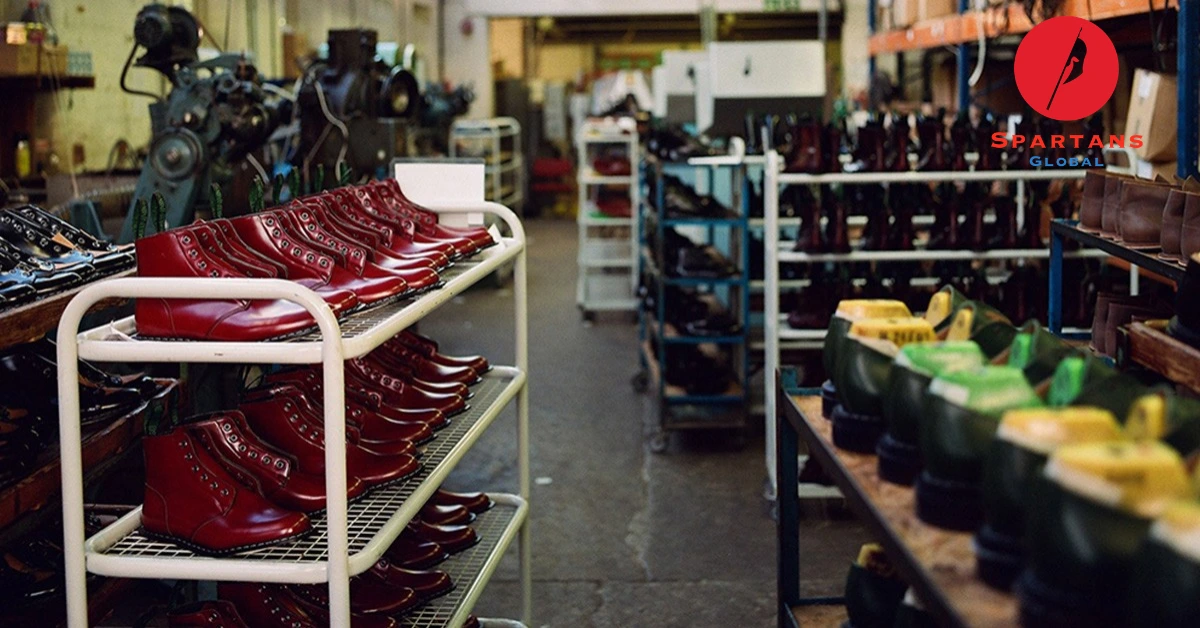
The Step-by-Step Footwear Manufacturing Process Explained in a very simple way. It tells you about how shoes are manufactured. You can learn about the shoe manufacturing process process. How the leather and soles are shaped. How to use machines in footwear making. The guide also explains the footwear production steps, the shoe factory workflow, and gives a simple footwear making guide to help you choose good quality shoes at Spartans Global.
High-Tech Shoe Manufacturing Process
The first real physical step involves Material selection where we pick the best Textiles, Rubber, or TPU (Thermoplastic Polyurethane). Once the materials are ready, we move to Cutting (Stamping). Big Die-cutting machines or high-speed Laser cutting machines are used to cut the shapes perfectly. This ensures that every piece of the Upper has the same size for every shoe. After the pieces are cut, they go to the Stitching department for Upper assembly. This is where workers sew the different parts of the leather or fabric together. This part of the footwear production steps provides strength. It prevents it from tearing easily during daily use.
Detailed Footwear Production Steps
Next comes the most important part called Lasting. A foot-shaped mold is inserted into the stitched upper. It gives the shape to the shoe. Make sure the material is tight and secured. This step is important. Without this step, your shoes would feel very loose. Once the shape is set, it is time for Sole attachment. We use a strong Adhesion process to stick the Outsole and Midsole to the bottom of the upper. Sometimes we use injection machines to melt PVC or EVA directly onto the shoe. This Sole bonding or Cementing ensures the bottom never peels off while you are walking or running.
Modern Shoe Factory Workflow
In a modern shoe factory workflow, Quality control happens at every single station. Check the shoe Insole and make sure it is soft. The Laces must be durable. If a shoe has a tiny scratch or a loose thread, it is pulled aside. At Spartans Global, we only want the best pairs to reach our customers’ hands. After passing all the checks, the Finishing process begins. The shoes get a nice Polishing to make them shine and look brand new. Then comes the Packaging where they are wrapped in paper and put into sturdy boxes. This careful footwear making guide ensures that you buy the same product that you expected when you saw it online.
| Shoe Component | Common Materials | Purpose |
| Upper | Leather, Textiles | Covers the top of the foot |
| Midsole | EVA, TPU | Provides shock absorption |
| Outsole | Rubber, PVC | Provides grip on the ground |
Essential Footwear Making Guide
If you want to understand the shoe production process, you have to look at the Tooling and Molds. Each size needs its own 3D mold to be created first. This allows the Press machines to shape the Sole perfectly for a size 8 or a size 10. It is a very technical part of the job that requires a lot of math and engineering to get right. Good shoe durability depends heavily on the Adhesives used during the Sole bonding phase. If the glue is cheap, the shoe will fall apart in the rain. That is why we use premium materials that can handle the heat and dust in Pakistan.
Choosing the Right Manufacturing Steps
The Manufacturing steps can change depending on if the shoe is for sports or a wedding. For sports, Injection molding is great because it makes the shoe lightweight. For formal wear, traditional Stitching/Welting is better because it looks elegant. We choose the best method for each specific design at Spartans Global to ensure maximum comfort. Before any mass production starts, we always go through Design and Development. We make a few Prototyping samples to test how they feel on real feet. If the sample is too tight or too heavy, we go back to the CAD software and fix it.
Conclusion
Following a proper footwear making guide is the only way to create a product that people will love. From the moment of Material selection to the final Polishing, every worker plays a huge role. Understanding the Step-by-Step Footwear Manufacturing Process Explained helps you see the value in every stitch and every sole. We hope this guide made it easy to understand how your footwear is built from scratch. At Spartans Global, we are committed to using the best shoe factory workflow to serve our customers.
Ready to buy your next footwear? Shop our latest premium designs today at Spartans Global! Call us at 92 000 786 for any help.
Email: inquiry@spartans-original.local
Frequently Asked Questions(FAQs)
What are the steps in shoe manufacturing?
Shoe making starts with design, then material cutting and stitching of the upper. After that, the sole is attached, the shoe is shaped, checked, and packed.
Which material is best for long-lasting shoes?
Genuine leather is strong and lasts for many years with proper care. Rubber soles also help shoes stay durable and comfortable.
What is the most important part of shoe manufacturing?
Good design and proper stitching are very important for strong shoes. They keep the shoe shape firm and make it comfortable to wear.
What are the raw materials of footwear?
Common materials are leather, rubber, foam, fabric, and glue. Laces, insoles, and synthetic sheets are also used.
What are the shoe making materials used in Pakistan?
In Pakistan, factories mostly use leather, PU, rubber, and EVA. Fabric, foam, and strong adhesives are also common.
What is the role of CAD in shoe making?
CAD helps designers make shoe designs on a computer. It shows the shape and size before the shoe is produced
Why are rubber soles used in shoes?
Rubber soles give strong grip and help prevent slipping. They also make walking more comfortable.